Small Business Guide to IT Compliance: HIPAA, PCI, and What You Actually Need
Most business owners didn't start their company because they wanted to become experts in compliance regulations. Yet whether you run a medical practice, accept credit card payments, work with government contracts, or provide software and professional services, chances are you've heard acronyms like HIPAA, PCI-DSS, CMMC, and SOC 2.
At first glance, these requirements can seem overwhelming. The good news is that many of them come back to the same basic idea: protecting information and reducing risk. While each framework serves different industries, they all encourage businesses to follow good security practices that help protect customers, employees, and the future of the company.
Why Compliance Matters
When people hear the word compliance, they often think about regulations and penalties. While those things certainly exist, most businesses benefit from looking at compliance from a different perspective. At its core, compliance is really about protecting the information your company works with every day and creating confidence among customers and partners.
Strong security practices also help businesses stay competitive. More organizations are asking questions about cybersecurity before signing contracts, and many industries now expect companies to demonstrate that they take data protection seriously. Having the right systems and processes in place can help build trust and create new opportunities that might not otherwise be available.
Good security habits also make day-to-day operations more reliable. Recovering from a cyberattack, hardware failure, or accidental deletion can be expensive and disruptive. Taking steps to safeguard systems and information helps businesses continue serving customers while reducing the risk of unexpected problems.
Healthcare Organizations Have Extra Responsibilities
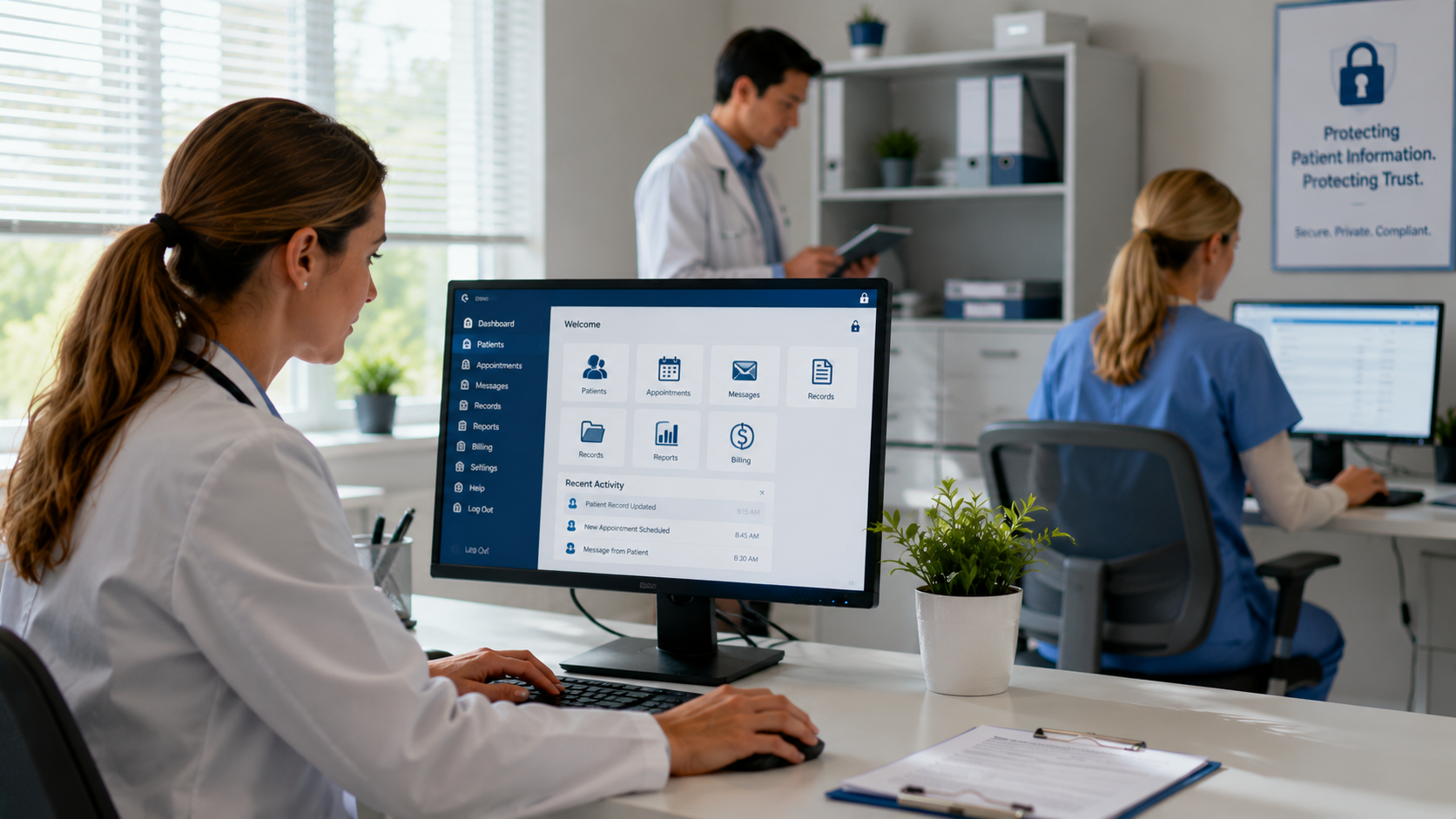
Medical practices, dental offices, clinics, and billing companies work with some of the most sensitive information people have. Patients trust healthcare providers with personal records and expect that information to remain secure. That's why HIPAA places a strong emphasis on protecting patient data and ensuring it is only available to the appropriate individuals.
Maintaining that level of protection involves much more than simply storing records on a computer. Businesses need secure systems, dependable backups, and safeguards that help prevent unauthorized access. As healthcare organizations continue moving toward digital records and cloud platforms, keeping information secure becomes even more important.
Fortunately, protecting patient information does not have to become overwhelming. With the right technology and proper guidance, healthcare providers can improve security while continuing to focus on what matters most—caring for patients and running their practice efficiently.
Businesses That Accept Credit Cards Need to Think About Security
Whether you operate a retail store, restaurant, online business, or professional office, accepting credit cards comes with certain responsibilities. Customers trust businesses to handle payment information safely, and maintaining that trust is an important part of providing a positive experience.
Keeping systems secure starts with the basics. Maintaining updated software, protecting networks, and regularly reviewing systems for problems all help reduce risk. Small issues that go unnoticed can eventually turn into larger problems, which is why ongoing attention plays such an important role.
For many business owners, compliance simply means making sure the technology supporting payment processing is being maintained properly. Taking those steps helps protect customers while also helping businesses avoid unnecessary interruptions and expenses.
Government Contractors Are Facing New Expectations
Manufacturers, aerospace suppliers, and businesses working with government agencies are seeing cybersecurity become a larger part of doing business. Companies that once focused primarily on production and delivery are now finding that security requirements are becoming equally important.
For many organizations, these expectations are tied directly to future opportunities. Businesses that want to compete for certain contracts may need to demonstrate that they have strong cybersecurity practices in place. As requirements continue to evolve, being proactive can help companies remain competitive and avoid delays when new opportunities arise.
Preparing for these expectations is often easier when businesses start early. Establishing clear procedures, protecting sensitive information, and having a plan for responding to problems can help organizations strengthen security while supporting long-term growth.
Why More Companies Are Asking About SOC 2
Not every compliance framework is tied to government regulations. In many cases, the demand comes directly from customers. Software companies, technology firms, and professional service providers are increasingly being asked to demonstrate that they have secure and reliable systems in place.
Large organizations want confidence that the vendors they work with take security seriously. Questions about data protection, uptime, and disaster recovery have become common during the sales process. Being prepared to answer those questions can help businesses strengthen relationships and create new opportunities.
For growing companies, SOC 2 often becomes less about meeting a requirement and more about building credibility. Demonstrating a commitment to protecting customer information helps establish trust and gives organizations an advantage when competing for larger clients.
Understanding Which Framework Fits Your Business
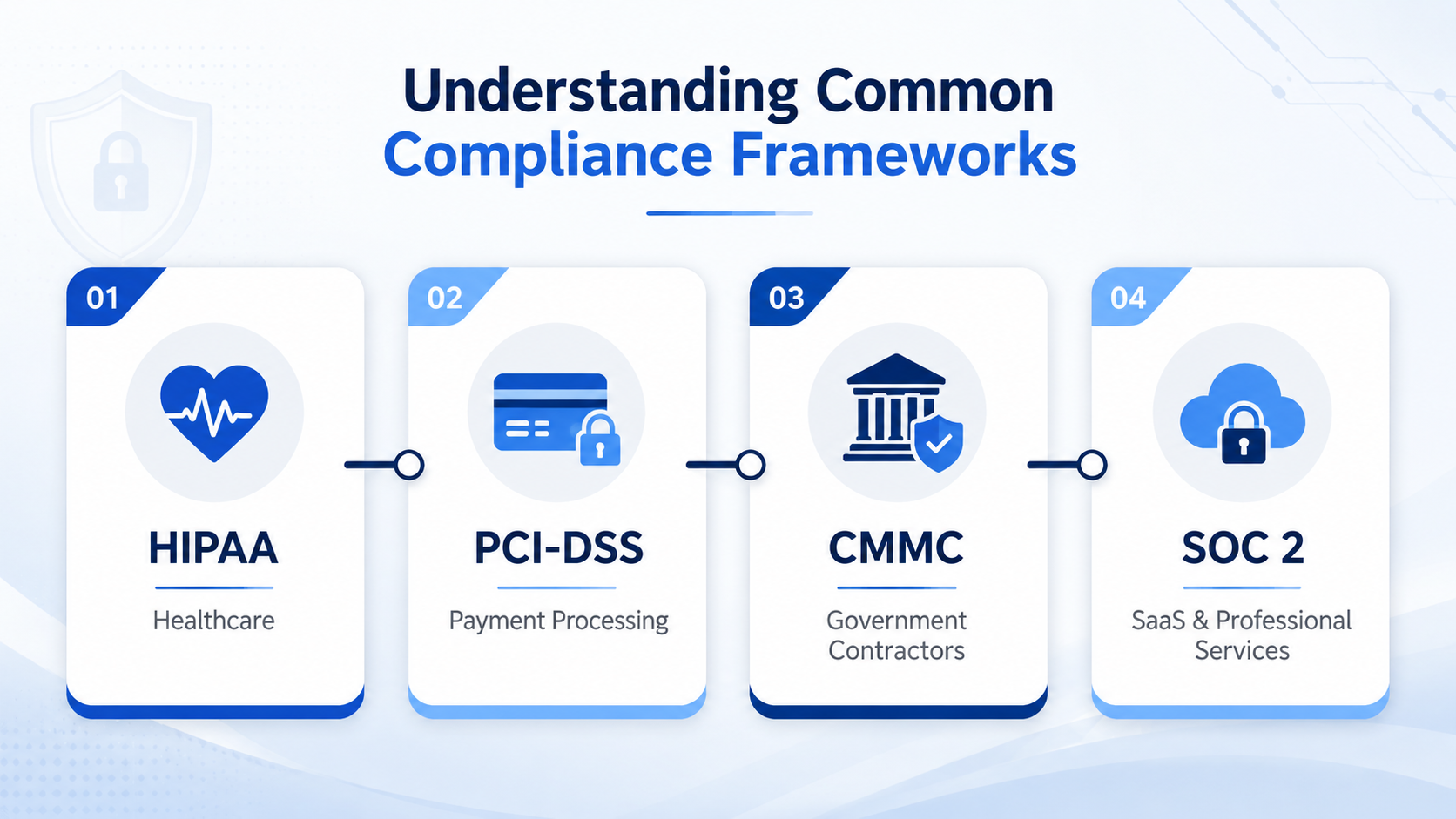
At first glance, all of these acronyms can blur together. In reality, each framework tends to serve different industries and business needs. Understanding which one applies to your organization is often the first step toward building a plan that makes sense.
Although each framework has its own requirements, the underlying goals are surprisingly similar. They all encourage businesses to protect sensitive information, limit unnecessary risks, and establish processes that help maintain trust with customers and partners.
Rather than viewing compliance as a collection of complicated rules, many businesses find it helpful to think of it as a roadmap. The specific destination may vary depending on the industry, but the journey often involves many of the same security principles.
Good Security Habits Benefit Every Business
No matter what industry you're in, there are certain practices that benefit nearly every organization. Having reliable backups, educating employees, monitoring systems, and limiting access to sensitive information all help reduce risk and improve resilience.
Businesses that take these areas seriously are often better prepared when unexpected problems occur. Whether it's a cyberattack, hardware failure, or accidental mistake, having a plan in place can make the difference between a minor disruption and a major setback.
The good news is that improving security doesn't necessarily mean making things more complicated. In many cases, small improvements and consistent habits provide meaningful benefits over time. Building a strong foundation today helps businesses adapt more easily as technology and compliance requirements continue to evolve.
Helping Businesses Build a Compliance Roadmap
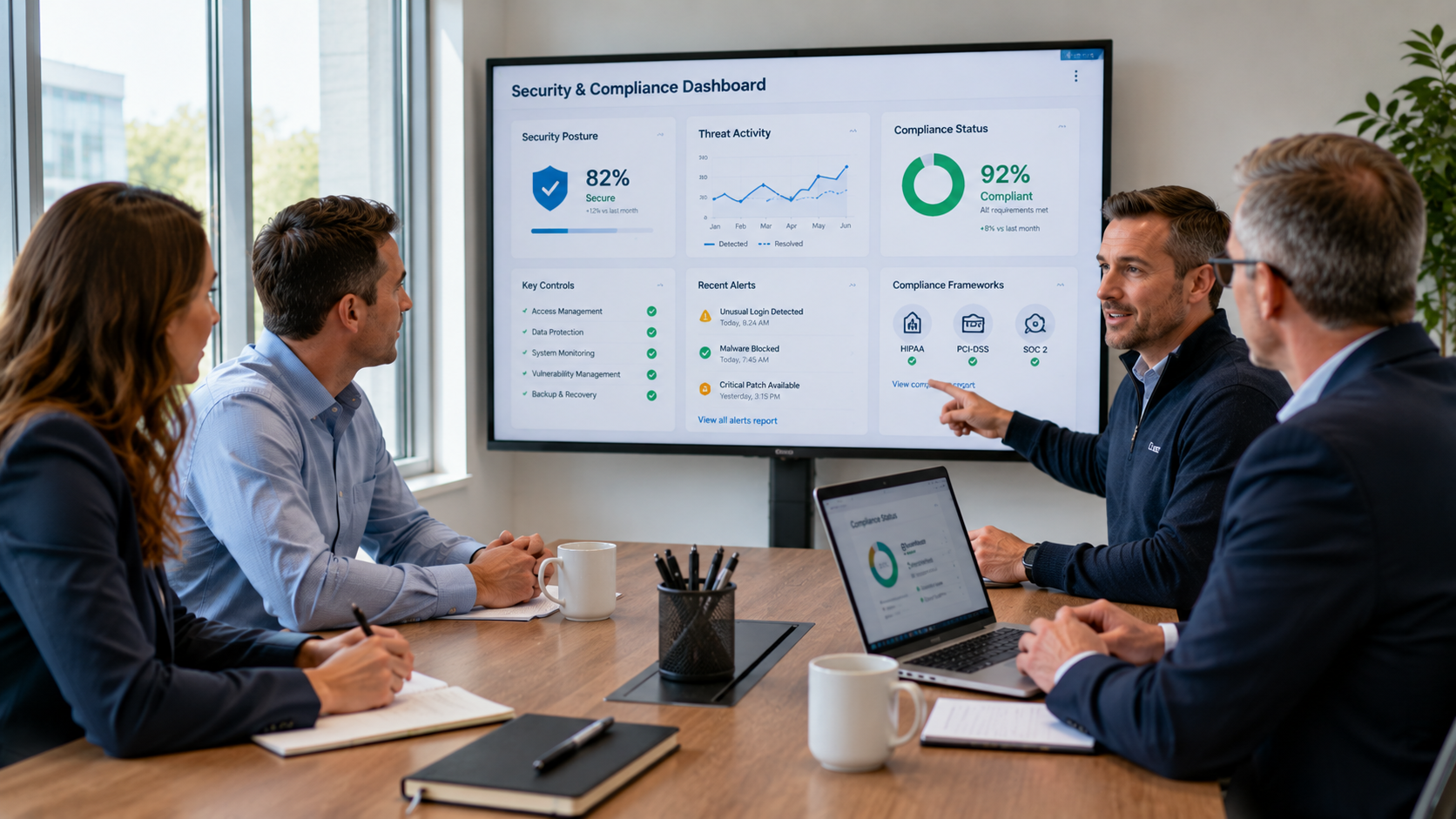
Trying to understand compliance requirements can feel intimidating, especially for small and mid-sized businesses that don't have dedicated IT departments. The good news is that companies do not have to navigate these challenges alone. Having an experienced technology partner can help simplify the process and provide clarity about where to begin.
Entre Technologies helps organizations evaluate their current environment and develop practical strategies that align with their goals and industry requirements. From
managed IT services and cybersecurity to
backup and recovery,
cloud solutions, and ongoing support, our team helps businesses create a stronger foundation for the future. Whether you're just beginning to explore compliance or preparing for new requirements, we're here to help you build a roadmap that makes sense for your business,
reach out today to see how we can help.